





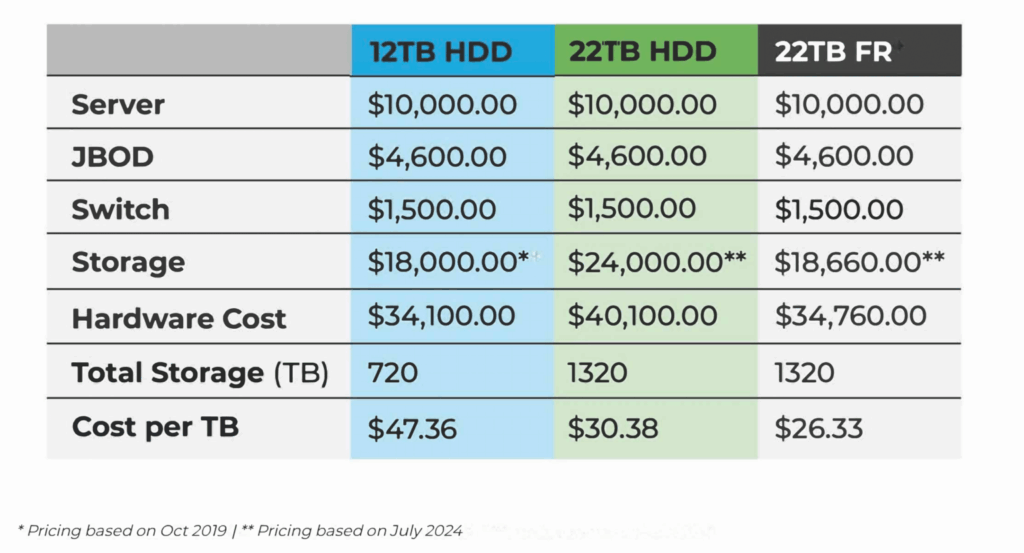
If your goal is more usable terabytes per dollar, factory recertified drives (FRDs) deliver real ROI: lower cost-per-TB, predictable performance, and OEM-validated quality. In a market where global supply chains are volatile and counterfeit activity is rising, FRDs sourced through authorized channels give you a known, traceable product. Why roll the dice on the gray market when you can buy a proven, warrantied option?
Similarly, procurement teams use FRDs as a strategic lever: a trusted solution for plugging supply gaps and a fast path to qualify cost-saving opportunities when they appear. Because FRD availability moves in real time, treating it as a proactive channel (monitored regularly, acted on quickly, and anchored by trusted partners) helps you capture savings without compromising reliability.
The Marketplace for Factory Recertified Drives
The case for FRDs is compelling: they’re as good as new, and in some cases may even carry reduced risk of early failure thanks to the extra checks they undergo before being released to market. That said, FRD availability typically fluctuates. Models, capacities, and batch sizes ebb and flow based on upstream events such as OEM quality holds and excess inventory returns.
That variability means procurement is less about placing predictable orders and more about gaining visibility into what’s available and when. Teams that succeed are those that partner with authorized distributors, track supply regularly, and act quickly when the right deals surface.
Lowering Storage TCO
The Origins of FRD Inventory
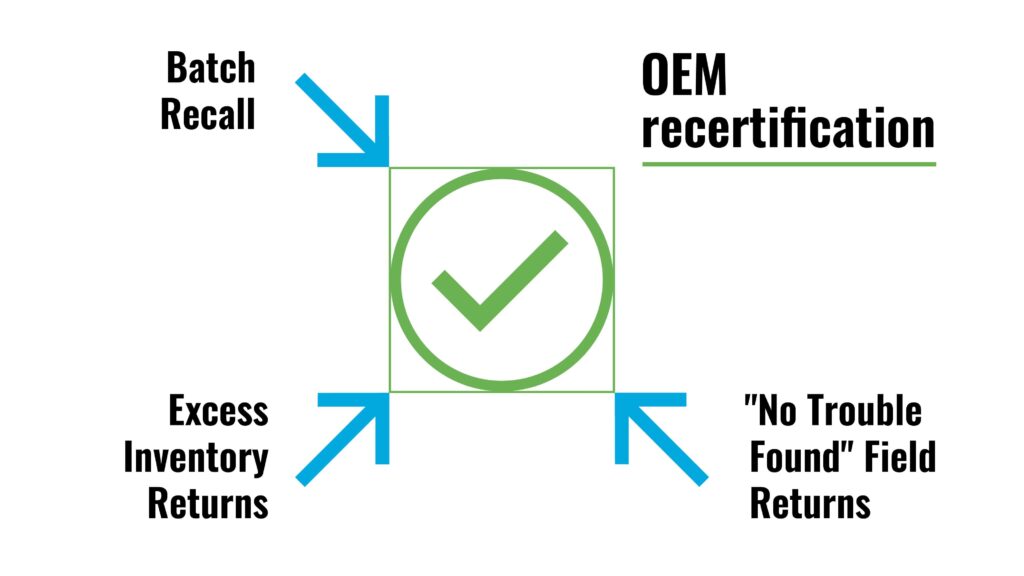
Understanding where factory recertified drives come from helps procurement teams assess both availability and quality. Inventory eligible for recertification typically originates from several sources, each with its own path back into the market:
Recall Batch Reuse
Original Equipment Manufacturers (OEMs) like Seagate, Western Digital (WDC), or Hewlett Packard Enterprise (HPE) may recall entire batches after discovering minor issues in a small subset of drives in the batch. The non-defective units are then thoroughly retested, updated to the latest firmware, and released back as FRDs. These FRDs are as good as new, and may even have reduced chances of failure due to additional checks carried out to ensure proper functionality.
Excess Inventory Returns
Large enterprise clients sometimes return unused inventory back to the OEMs. This may be due to over-procurement or cancelled projects. These new and unused drives are then sold as FRDs on the market. Authorized distributors typically manage this process, verifying serial numbers, confirming warranty status, and routing drives through OEM certification channels.
“No Trouble Found” Field Returns
It is common for drives to be returned early in their lifecycles without any actual defects. These drives then undergo full OEM testing and recertification protocols, and are reintroduced into the market as FRDs.
Upstream Supply and Why Relationships Matter
Getting up-to-date info on FRD availability is essential to procurement planning, since upstream supply directly shapes the types of drives in line for recertification. Unlike the steady cadence of newly manufactured drives, FRD inventory can shift unexpectedly, which makes it important to plan contingencies, watch for cost-saving opportunities, and guard against the risks of counterfeit or gray-market alternatives.
To have a sense of what’s on offer, a few contacts go a long way. Partnering with an authorized distributor which works with OEMs in a trusted, long-term capacity can give you a friendly ear to the ground for procurement opportunities you might otherwise miss.

Related Reading
As the hard drive industry innovates, so do reseller methods and standards. It’s been a long road from the in-house repair of yesteryear to the intricate recertification processes in place today.
Strategic Purchasing: Forecast and Buy in Cohorts
Procurement strategies for factory recertified drives work best when focused on consistency. Because FRD inventories vary, purchasing homogenous batches (or cohorts) with the same model, capacity, and firmware helps ensure predictable performance across deployments.
This approach also simplifies lifecycle management: it streamlines replacements, aligns warranty handling, and reduces friction in RMA processes.

Related Reading
Lowering TCO starts with procurement, but doesn’t end there.
How to Lower Total Cost of Ownership (TCO) for Hard Drive Storage
Monitoring Price Trends in the FRD Market
Prices for factory recertified drives can shift quickly, and procurement teams that track these movements gain a clear advantage. Factors such as inventory age, model popularity, and large-scale returns all shape price dynamics. For example, older stock typically sells at a discount, while high-demand models may command a premium. Similarly, the release of a new model can flood the market with prior-generation inventory, opening favorable buying windows.
By monitoring these shifts, procurement professionals can position FRDs as both a contingency for supply gaps and a lever for cost savings. Working with vendors who have insight into spot availability further helps reduce uncertainty and secure capacity at the right price.

One useful tool is https://camelcamelcamel.com/, which lets you see graphs of how Amazon prices of storage products, including recertified products, have changed over time. While this gives you no sense of vendor reliability, and might not show the most competitive prices, it can be a useful benchmark for comparison.

Related Reading
Seagate and WD typically refer to drives as “recertified,” whereas Toshiba may call them “factory refurbished.” To get the best deal, cut through the terminological confusion by knowing what to look for.
Integrating FRDs into a Lifecycle Strategy
To get the most out of your FRD procurement, it helps to view each purchase in the context of your broader hardware lifecycle. Consider questions like:
- Are you acquiring a fleet of drives to meet a defined need, or buying ahead as a contingency in today’s volatile supply environment?
- What is your refresh timeline? Will you invest in newer models, or follow the path of many hyperscalers and MSPs by extending asset life to capture more value?
- How might your FRDs depreciate compared to new drives, and how does that affect ROI over time?
- How do you plan to tier storage strategically across new, factory recertified, and used inventory?
You don’t need to answer these questions alone. A trusted ITAD or authorized distributor can help map out a lifecycle plan that balances cost savings, reliability, and secure disposition.

Related Reading
The average refresh cycle for storage devices have lengthened over time. Revisiting your refresh schedule is an opportunity to cut costs and complications.
Working with Certified Suppliers
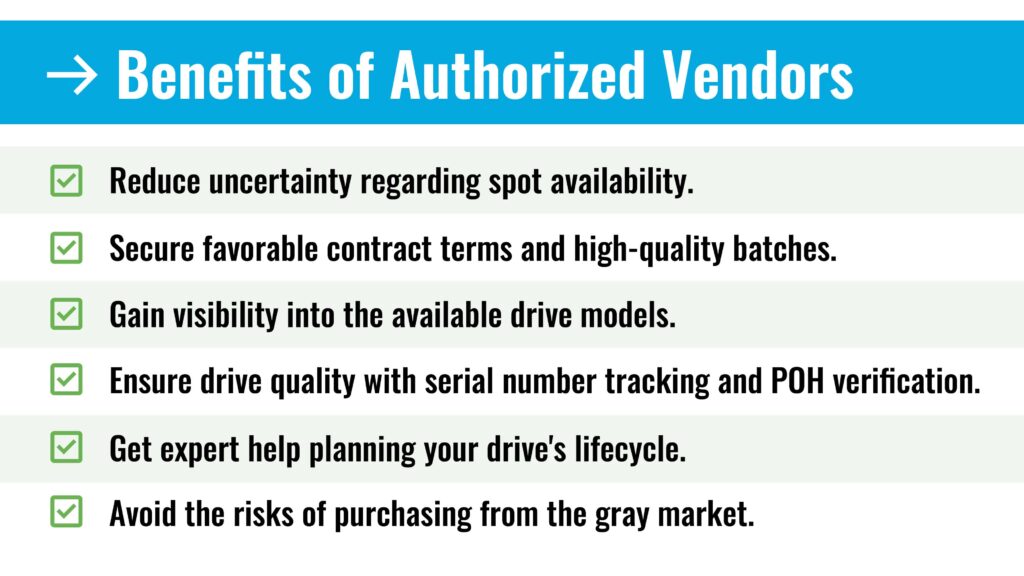
When sourcing factory recertified drives, vendor choice is critical. Inconsistent terminology across the market (“recertified”, “refurbished”, “renewed”) creates confusion, and bad actors sometimes misrepresent how much use a drive has. With counterfeit activity on the rise, cutting corners on supplier vetting can be costly.
That’s why procurement teams should prioritize transparent vendors with OEM authorization and full traceability. A certified channel signals that proper recertification protocols have been followed, with serial number tracking and power-on-hours (POH) verification. Authorized distributors also frequently offer warranties of 6-months to 1-year.
Trusted suppliers also make returns and RMAs straightforward, reducing operational risk. And by maintaining long-term relationships with authorized distributors or storage ITAD partners, buyers often gain early access to high-quality batches and more favorable contract terms.

Related Reading
In addition to reduced costs, FRDs are a sustainable option, and a key part of the emerging circular economy for storage.
Factory Recertified Drives & The Case For Sustainable Storage
Factory Recertified Procurement: A Playbook for Success
Procuring factory recertified drives requires a different mindset than buying new. Success depends on understanding how FRD inventories enter the market and on developing procurement strategies that match: purchasing in homogenous batches, monitoring price trends, and working with certified suppliers.
Handled this way, FRDs become more than a cost-saving option—they’re a strategic investment. They help procurement teams plug supply gaps, mitigate counterfeit risk, and capture reliable capacity at lower TCO. Taken together, these practices deliver both immediate savings and long-term operational stability.
Learn more about Horizon Technology’s market-leading program for Seagate recertified drives.