




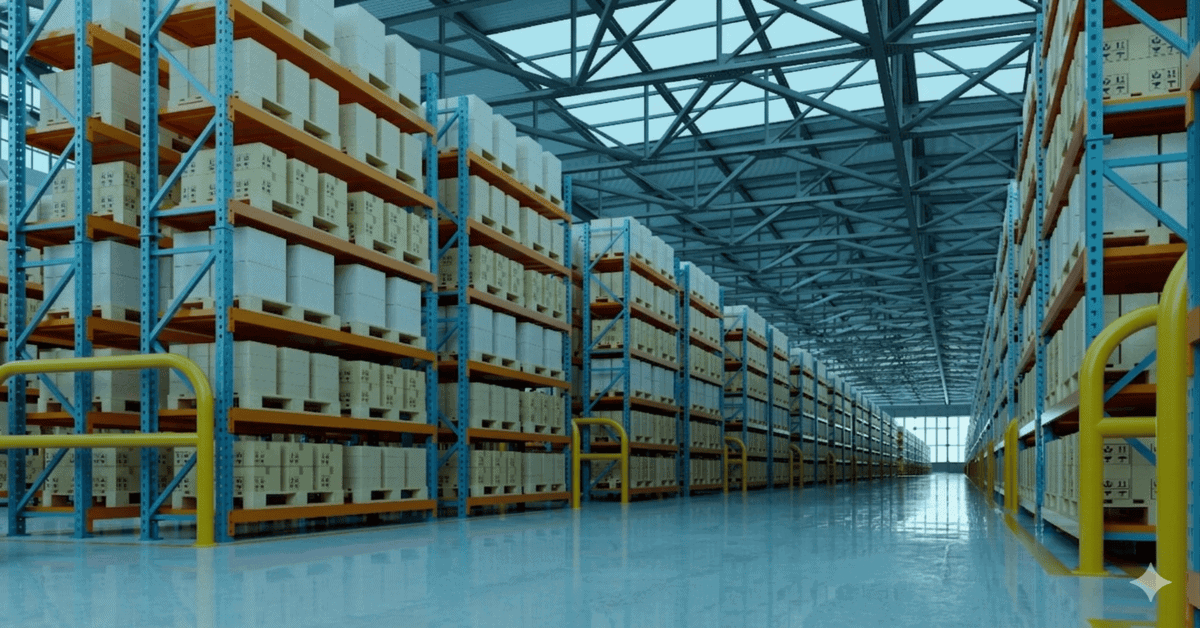
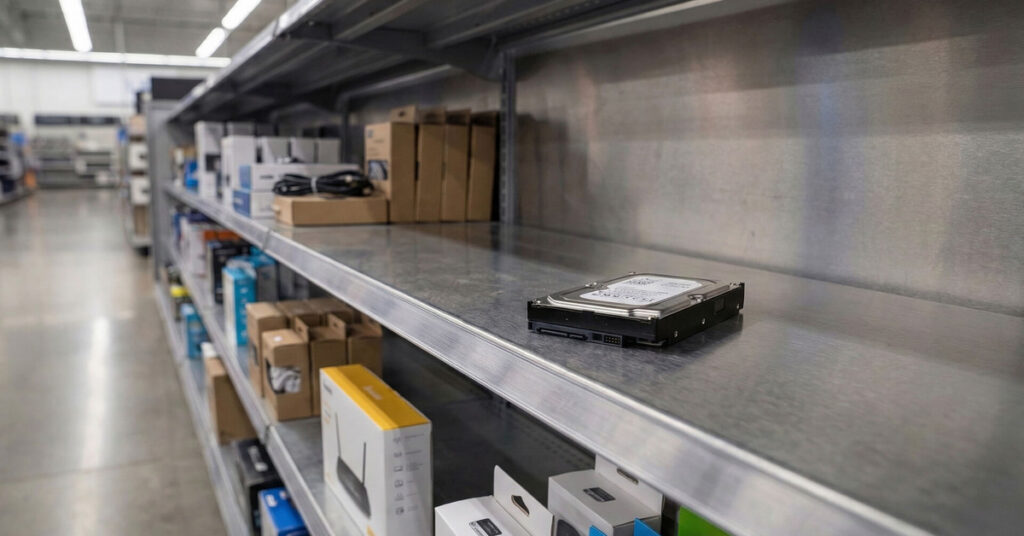
Have you heard? It’s a tough market out there when it comes to HDD availability. Demand induced by the AI supercycle is one of the main drivers of shortages in just about, well, everything tech related.
But while much of the attention goes to AI-driven demand, there’s an oft-overlooked factor. HDD sales have shifted from a commodity model to a build-to-order model involving long-term agreements between OEMs and hyperscalers.
In practice, this means that much of the HDD market now revolves around hyperscalers. This leaves smaller-scale operations often struggling to procure the affordable hardware they need. However, HDD long-term agreements have the side-effect of giving a boost to the HDD reuse market, meaning that affordable options are still available if you know where to look.
Related Reading
Long-term HDD agreements will likely dominate long after the shortages cease. Here’s a look at how factory recertified drives can mitigate supply issues.
Sold Out: Western Digital and Seagate
In early February, Western Digital announced that it was sold out of HDDs for 2026. Soon after, Seagate announced that it had sold out as well. And while Toshiba hasn’t made a similar announcement, reports indicate the firm declined to replace a large HDD under warranty due to lack of available stock.
What gives? The reason is no secret. “We have firm POs with our top seven customers,” explained WD CEO Irving Tan. “And we’ve also established [long-term agreements] with two of them for calendar 2027 and one of them for calendar 2028.”
This reflects a deliberate shift by OEMs to better align supply with demand. Both WD and Seagate are engaged in a concerted effort to more tightly manage manufacturing capacity. Seagate CEO Dave Mosley of Seagate said “multiple cloud customers are discussing their demand growth projections for 2028, underscoring that supply assurance remains their highest priority”.
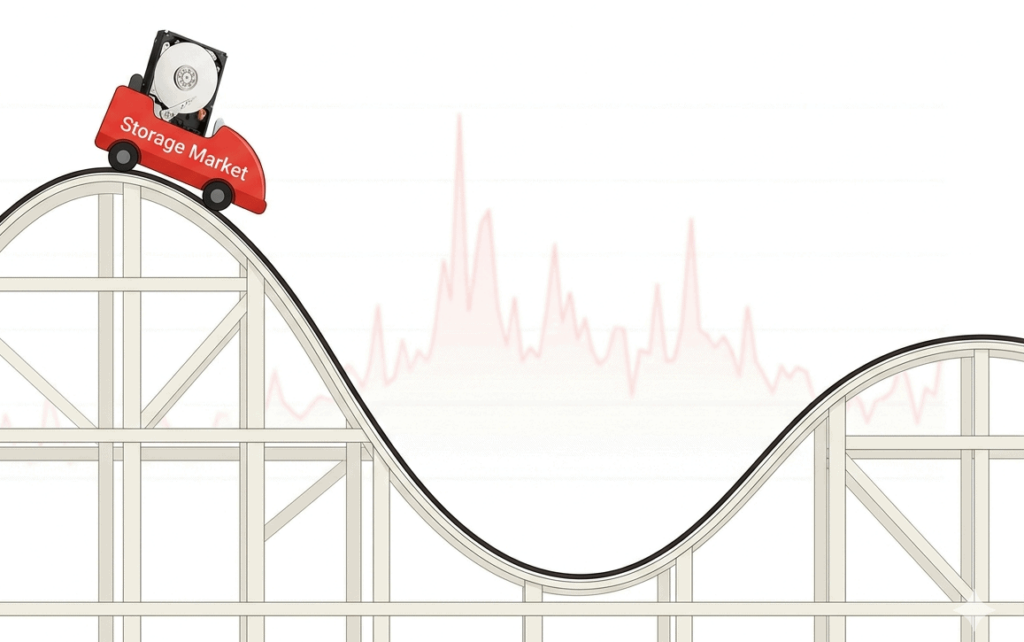
After experiencing a boom-and-bust roller-coaster after the pandemic, OEMs needed a way to anticipate demand and smooth out supply. Long-term agreements with major purchasers offered a clear way to accomplish this.
This environment makes acquisition difficult for smaller purchasers, such as enterprise data centers. Even before Seagate and WD effectively sold out, nearline shortages meant increased lead times. By mid-2025, Trendforce reported that nearline shortages increased lead times from a few weeks to over 52 weeks. Now, with stocks gone or low for each of the Big Three HDD manufacturers, mid-to-small-scale operations are left in the lurch.
The Shift to Long-term Agreements
What’s driving the shift from a commodity model to long-term agreements? The story doesn’t start with AI. It doesn’t even start with the post-pandemic boom-bust cycle. Instead, it starts with two trends: the rise of SSD and the shift to hyperscale data centers.
Pre-History: Nearline Dominance
Pre-2020, SSD was getting faster and cheaper, and gradually supplanting HDD in consumer devices. This meant that nearline drives became an ever larger proportion of drives sold.
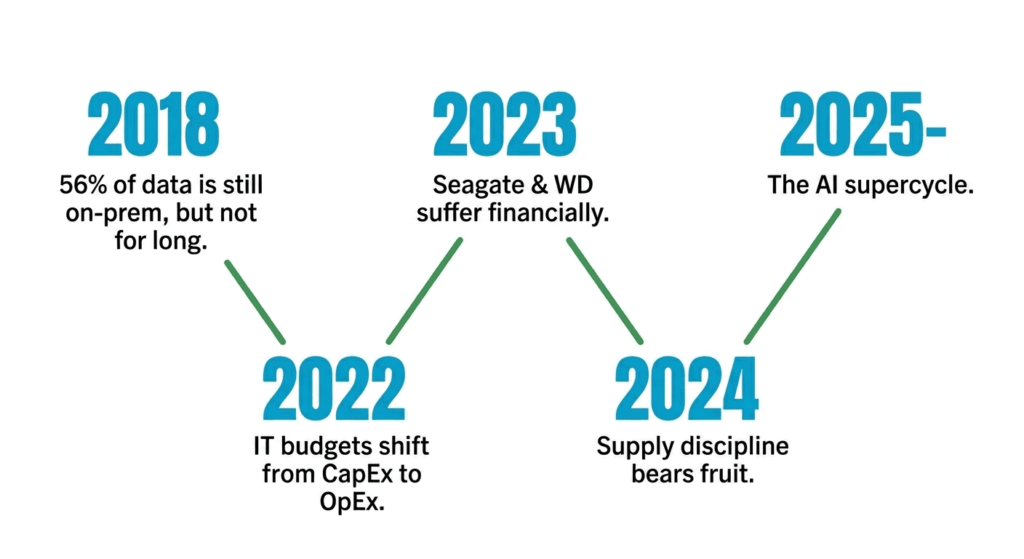
At the same time, overall data capacity shifted significantly from enterprise on-prem data centers to hyperscale data centers, whose massive capacity storage is still dominated by nearline HDD. According to Synergy Research Group, in 2018 56% of data was stored on-prem, versus 32% today. As of 2025, hyperscale data centers account for 48% of capacity, a share projected to rise to 67% by 2031. Around the beginning of the next decade, just 19% of capacity will be on-prem enterprise data centers.
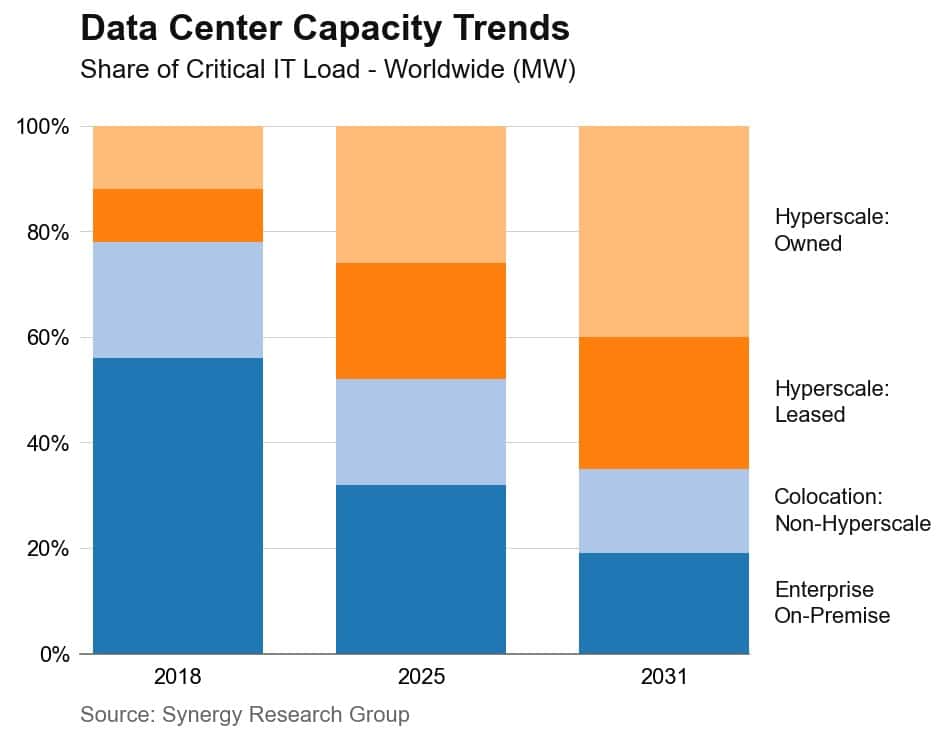
With consumer HDD largely supplanted by SSD and business data shifting cloud-wards, nearline sales began to dominate as a share of drives sold. HDD OEMs increasingly saw hyperscalers, instead of enterprise or consumers, as their bread-and-butter. Both OEMs and hyperscalers benefited from the stability of long-term agreements. This laid the groundwork for the shift from a commodity model to a build-to-order model.
Related Reading
Rumors of the death of HDD are greatly exaggerated. With flash prices soaring, low $/TB HDD will continue to have a crucial role storing data at scale.
The Pandemic’s Shadow: Boom & Bust
Another major impetus for the move to long-term contracts between HDD OEMs and hyperscalers was the post-pandemic see-saw in demand. During the pandemic, demand was low. IT budgets shifted from CapEx to OpEx, and enterprise data centers were faced with mass closures.

Then, as the economy came roaring back to life, hyperscalers overcompensated and bought up as much inventory as they could get their hands on. This led to a glut. As hyperscalers took their time working through surplus inventory, OEMs suffered financially. In 4FQ2023, Seagate posted its lowest revenues in 17 years, and WD reported a net loss of $715 million. This trough lasted throughout 2022 and 2023, until demand began to pick up again in 2024.
This bad patch led OEMs to consider ways to smooth out demand. Even in 2022, Seagate was making repeated reference to “supply discipline”. By 2023, the firm explicitly discussed the strategy of “carefully managing our manufacturing capacity through a build-to-order approach for certain areas of the business, to align our future production output with customer qualification and demand plans.” A shift in purchasing arrangements had been set in motion.
The Build-To-Order Solution
While the HDD industry’s move to a build-to-order model began before the AI supercycle really took off, there’s no doubt that AI caused the trend to accelerate.
By 2Q2024, Mosley was calling the supply discipline strategy a success. “The enhanced discipline we’ve built into the business, including strict cost controls, management of supply, and the strengthening of our balance sheet gives us an excellent foundation to build on as we move into a broader recovery,” he insisted.
Mosley believes that this trend is good for consumers as well:
We’ve talked about this build-to-order before, and I think we’re getting a lot of good reception. There’s a lot of other supply chains that are actually managed this way by these people. So, they understand it fairly well, and they see the TCO benefits of the higher capacity drives, so they want to reach for that, plan it well and they’ll get it. And we have to be careful, of course, because the factories have been so decimated by this downturn that we need to make sure that as we grow back, we go back in a smart way.
Meanwhile, Western Digital is increasingly positioning itself as a “storage infrastructure partner,” underscoring its commitment to long-term contracts. When making a major announcement of their strategy to increase HDD bandwidth, they emphasized that it was “building on the strategic moves the company completed over the past year: shifting to long-term customer partnerships based on multi-year commitments.”
For now, the build-to-order model seems to be paying off. In addition to improved financials, the resultant stability led to Seagate getting a S&P ratings upgrade.
Navigating a Long-Term Contract Environment
The upshot is this: there’s a concerted, strategic shift towards selling HDD as part of long-term contracts. While this may be good news for OEMs and the hyperscalers they cater to, there’s a definite downside: it leaves smaller-scale operations to fend for themselves. So what’s an enterprise IT asset manager to do?
When one door closes, another one opens. One upside to the storage shortages is that they are likely to increase interest in drive reuse.
This reuse can take several forms, from procurement to life extension. Not all procurement options are good: on the ‘grey market’, fraud abounds, and unscrupulous sellers sometimes tamper with drives to misrepresent their level of usage. A better option is to buy from authorized distributors. These distributors sometimes have deals with the OEMs, giving customers the inside scoop on when recertified inventory will come available.
When it comes to procuring reused drives, factory recertified devices can help to mitigate supply issues. Factory recertified drives are devices which have seen little or no use, which have gone through an extra battery of tests for reliability before being resold at a discount. Devices slated to be recertified include drives that are part of excess inventory returns, batch recalls, or which were used as display devices.
Finally, another winning strategy is to be more diligent about reusing drives internally where possible, extending device life. Something as small as staying on top of firmware updates can go a long way. According to analyst Jonmichael Hands, “The number one thing you can do to increase SSD and hard drive reliability is to update the firmware.”
Related Reading
Getting the best deals on factory recertified drives takes some strategy. From monitoring price trends to finding reliable suppliers, here’s our guide to procuring the recerts you need.
Navigating Procurement Strategies for Factory Recertified Drives
Living With A Long-Term Supply Chain
Hyperscale data centers will continue to grow as a slice of overall capacity. This means that HDD OEMs are unlikely to reverse their strategy of catering to major players in the form of long-term agreements. For enterprise data centers, the edge will go to those who know how to strategically access and leverage available inventory.
By extending drive life, buying recertified, and finding official distributors which have deals with OEMs, companies can weather choppy markets and make their operations more resilient. In the future, this kind of procurement creativity may just carry the day when it comes to hardware acquisition.
Learn more about Horizon Technology’s market-leading program for Seagate recertified drives.