





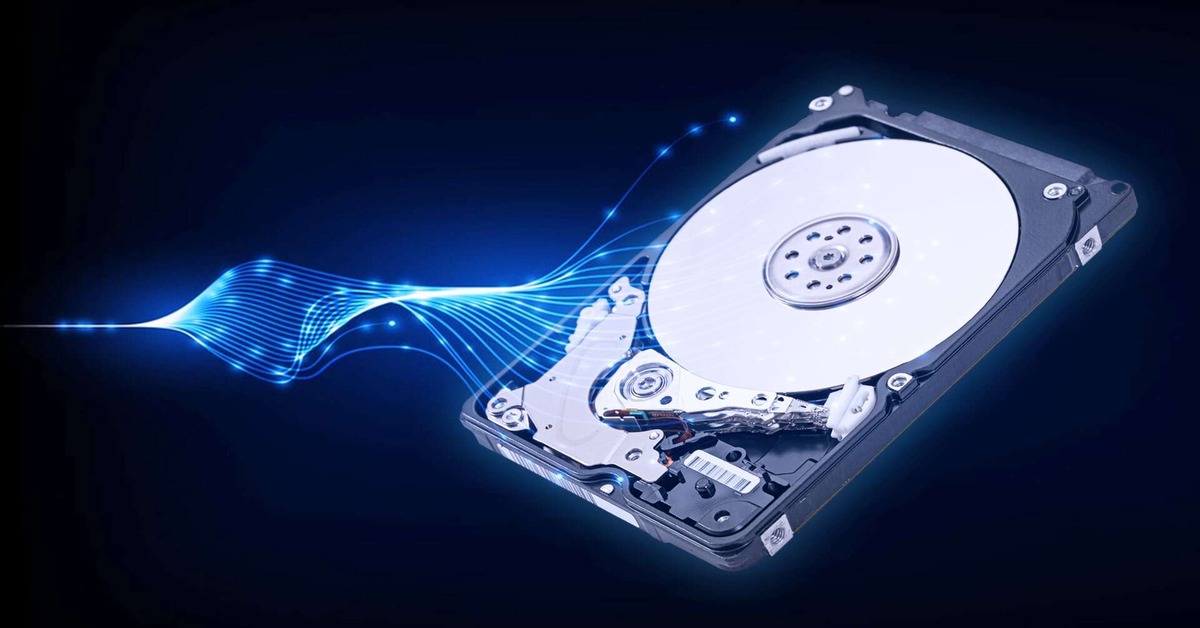
With technologies like generative AI processing petabyte-sized datasets in real time, innovation in data storage infrastructure has become key to supporting advances elsewhere. Enter the rise of NVMe for HDD.
NVMe (Non-Volatile Memory Express) is a protocol standard that governs the connection between a storage device and its host. While the protocol was made for flash, NVMe HDDs may prove a crucial step towards effective and efficient storage solutions.
Since HDDs continue to be a cost-effective solution for data centers, NVMe-compatibility opens the door to using HDDs alongside SSDs in high-speed compute environments. Paired with the Peripheral Component Interconnect Express (PCIe) physical interface, NVMe native HDDs may reduce complexity and chances of failure.
Let’s unpack NVMe, how it compares to SAS/SATA, and the benefits and potential drawbacks of extending the protocol to hard drives.
What’s So Special about NVMe?
NVMe, like the legacy SAS (Serial Attached SCSI) and SATA (Serial Advanced Technology Attachment), is an interface/protocol. It defines methods of logical and physical connection between a storage drive and the host. The logical protocols are rules of data transfer, while the physical interface is the connector/cable/bus type. Physically, NVMe typically operates over a Peripheral Component Interconnect Express, or PCIe bus.
HDDs traditionally run on SATA/SAS protocols, which were specifically developed with HDD in mind. By contrast, NVMe was designed to perform with high speed flash storage like next-generation SSDs, enabling better throughput and transfer speeds. NVMe has the ability to run parallel operations, and can achieve speeds up to 128 GB/s and queue depth of 64,000.
This means that it outperforms both SATA 3.0, which offers speeds up to 6 Gbps and queue depth of 32, and SAS-4, which offers speeds up to 22.5 Gbps that and a queue depth of 254.

Related Reading
NVMe has increasingly challenged SAS, which was introduced in 2004. As the demand for low-latency storage increases, can SAS survive for the long term?
HDD Support and the First NVMe HDD
When NVMe 2.0 was released in June 2021, it included HDD support. The following year, OCP (Open Compute Project) accepted and released the NVMe HDD specifications.
While current HDDs can’t exploit the full potential of even SATA 3.0 interface speeds, magnetic media is evolving fast. Dual actuator HDDs, such as the Seagate’s EXOS 2X18, enable a maximum sustained transfer rate of up to 554 mbps. Granted, this is nowhere close to the fastest SSDs, which have sequential read/write speeds up to 14,500mbps/12,700 mbps. But the ongoing development of high-cap dual actuator HDDs raises the prospect of growing bandwidth for data-intensive tasks.

Seagate demonstrated the first NVMe HDD at an OCP summit in November 2021. The proof-of-concept included a 2U JBOD enclosure running 12×3.5-inch drives connected through an NVMe interface with a simple PCIe switch.
At Nvidia’s 2025 GTC (GPU Technology Conference), Seagate showcased a high efficiency storage architecture integrating NVMe HDDs and SSDs with Nvidia’s BlueField DPUs and AIStore software. The SSDs were used for cache, and the HDDs for data. The result: the performative equivalence of four 64TB SSDs at only one-sixth of the cost.

The proof-of-concept demonstrated the feasibility of a simplified system architecture which eliminated SAS/SATA overhead, reduced latency with direct GPU-to-storage communication, and tightly scaled via integration with NVMe-oF (NVME over fabrics).

Related Reading
The prospects for NVMe HDD depends on whether it can help data center operators save money as part of the overall storage mix. When it comes to lowering the TCO of your hardware, there’s a lot to consider.
Advantages of NVMe HDDs
As AI advancements fuel demand for high-cap storage, the use of the NVMe protocol across media types helps simplify storage architecture, making devices interoperable and easier to manage.
Many enterprises find storing large datasets on SSDs alone financially unsustainable. However, the speed limitations of HDDs, partly arising from complex protocol translation, has long meant that they couldn’t be utilized effectively in in the high-performance contexts which AI infrastructure demands. The high cost and technical difficulty of unifying SAS/SATA HDDs with NVMe media in storage architecture adversely impacts latency.
The adoption of NVMe HDDs may go some way towards addressing these issues.
Simplicity: Removal of bridges/adapters/controllers needed for SAS/SATA-based HDDs, enables a wider range of use cases. Examples include the use of HDDs behind smart NICs (network interface controllers), computational storage with ASIC/FPGA accelerators shared between multiple HDDs, tight integration between HDDs and SSDs, higher bandwidth and lower bottlenecks and latency, and easier scalability of storage infrastructure.
Performance: NVMe HDDs also enable direct GPU-to-storage access through a DPU (data processing unit), further reducing issues caused by routing data through CPU pipelines that increase latency. Additionally, NVMe makes it possible to integrate HDDs into high-performance data centers through NVMe-oF (NVMe over fabric), facilitating an effective, composable data center architecture based on simplified hardware and firmware layers.
Speed: As dual-actuator HDDs become more widespread, HDDs may edge closer to being able to take advantage of the throughput NVMe allows.
Related Reading
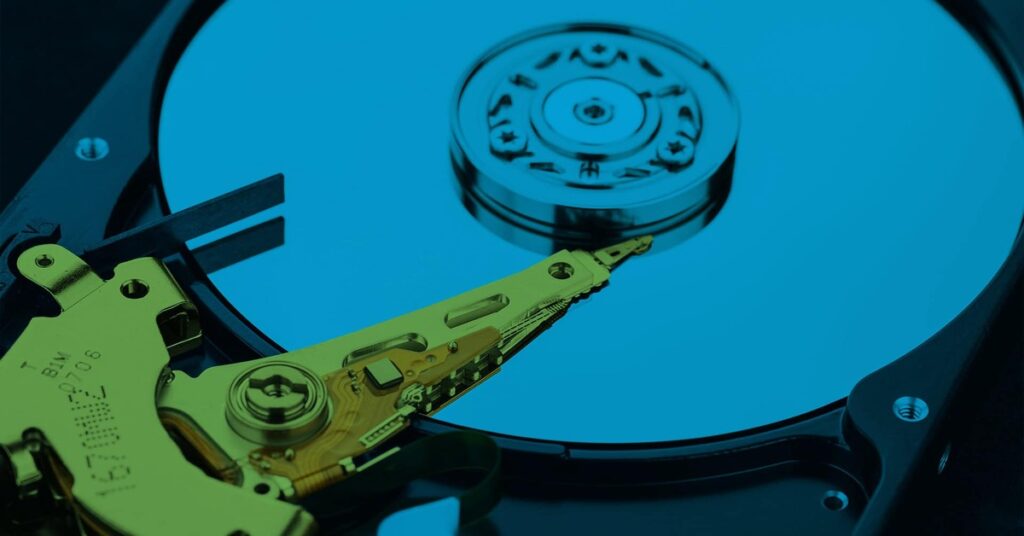
Dual actuators employ two actuator arms which operate simultaneously. This creates a parallel system of two concurrent channels for data input and output.
Potential Drawbacks of NVMe HDD
Although NVMe HDDs offer a host of advantages, they do face several challenges.
While Seagate is moving forward with a roadmap for NVMe HDDs, its rivals appear uninterested, with no updates in sight. And until other manufacturers also join in the R&D, large enterprises may find it difficult to adopt NVMe HDDs due to limited options and supply.
Additionally, given that three suppliers have announced 122 TB SSDs (with 244 TB on the horizon), some, like Chris Mellor, think that SSDs might overtake HDDs as data center mainstays. His reasoning is that QLC SSDs offer lower TCO and higher speeds, and that the power savings compared to hybrid arrangements increase along with capacity. If this is true, the market may eventually prefer SSDs.
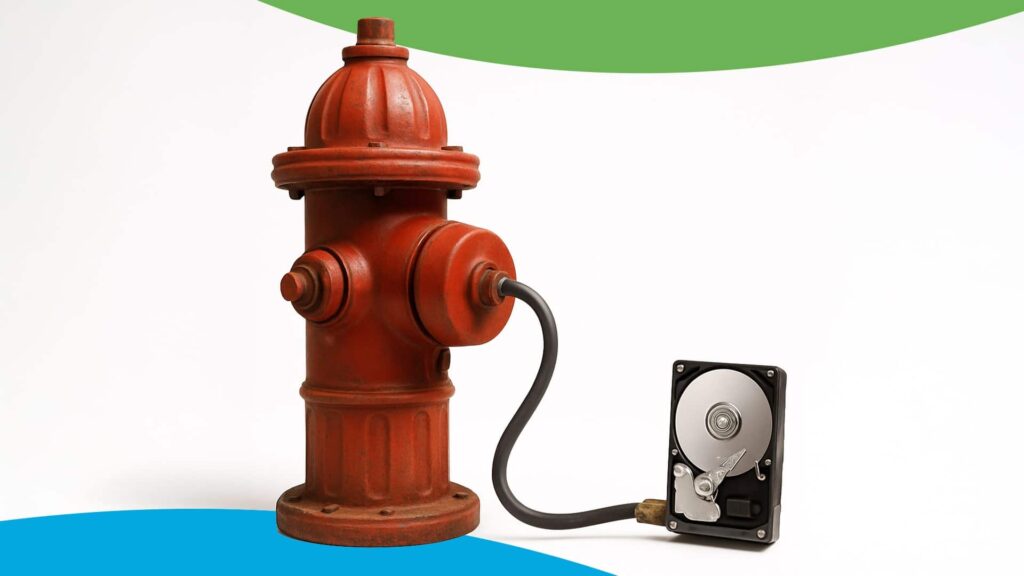
With current HDDs unable to saturate transfer speeds of the already widespread SAS/SATA interface and with slow development of NVMe HDDs, it’s not clear when HDDs might be able to take advantage of NVMe’s transfer speeds. While dual-actuators allow for increased read/write speeds, NVMe for HDD has still been amusingly compared by Mellor to “hooking up a faucet to Niagara Falls”.
But even if HDDs are not yet able to utilize the superfast throughput capabilities that NVMe offers, rotating media technology is getting better all the time. And other benefits, like low latency, lower bottlenecks, high throughput potential, simplicity, and ease of scalability have the potential to drive adoption.
Related Reading
In a landscape of big datasets and even bigger ambitions, will hard drives maintain their central role as affordable high-cap storage?
The Future of NVMe HDD
Analyst Tom Coughlin is optimistic about the prospects of NVMe HDD. While adoption will take time, he believes that NVMe HDD will show up in storage systems by the end of 2025, and dominate enterprise and data center HDD by 2028.

Seagate representatives told Coughlin that leaning into an NVMe HDD future would involve further reducing complexity by removing the PCIe switch.
Will other firms follow? Back in 2019, Western Digital acquired NVMe-oF technology from Kazan Networks. The firm has recently added new capabilities to their “Open Composable Compatibility Lab”, which tests NVMe-oF architecture systems. Given WD’s testing capabilities and its offerings in the NVMe JBOF space, one could imagine WD developing something interesting if they set their sights on NVMe HDD.
Beauty in Simplicity
Previous efforts tried to make SSDs compatible with legacy SAS/SATA protocols. But with the increased adoption of SSDs, there’s reason to make HDDs compatible with the NVMe interface where possible. This not only reduces complexity and eases scaling by removing the need for bridges, but may improve overall performance crucial to modern high-performing data center ecosystems. While some variables are still in play, with all its advantages it looks like NVMe HDDs might be here to stay.
Contact Horizon Technology for help procuring affordable hard drives which meet the needs of your data center.